Saltwater is one of the harshest terrestrial environments for a data center other than maybe lava. Pressure, oxygen, and sodium ions make the ocean extremely corrosive to metal structures.
You could be right about the first part, but I take issue with the second. Ships in seawater usually need sacrificial anodes so corrosion eats those instead of the hull and fasteners. I’m not sure how that would affect heat exchange, maintenance, or long-term reliability. It would definitely limit the materials you could use.
You know that those sacrificial anodes are simply zinc, right? One of the most plentiful metals on the planet?
Why would anyone on earth not make those simply swappable, like on boat motors, and on ocean going vessels.
We have been building ocean going vessels out of metal for over a century now. I think those so-called engineering challenges are solved.
Ever notice that the vast majority of oxidation actually occurs ABOVE the waterline?
Care to guess why?
Here’s a hint, look at the first 3 letters of the word “oxidation.”
Edit to add: Plus there’s different metal choices for the actual heat exchangers, such as stainless 2507 or even titanium, which is extremely resistant to such corrosion, and for the parts of the building that do not need heat exchange, an insulating coating will mitigate nearly all oxidation issues.
You clearly know more about this than I do. I understand the anodes are zinc, but you have to use materials that are going to feed on the zinc rather than visa versa. I honestly don’t know if that’s a meaningful limitation or not. I just know about boats and how to delay the water from destroying the hull.


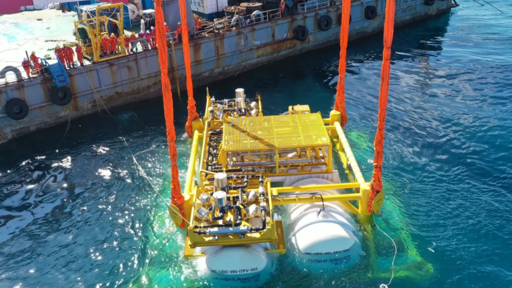
Saltwater is one of the harshest terrestrial environments for a data center other than maybe lava. Pressure, oxygen, and sodium ions make the ocean extremely corrosive to metal structures.
You could be right about the first part, but I take issue with the second. Ships in seawater usually need sacrificial anodes so corrosion eats those instead of the hull and fasteners. I’m not sure how that would affect heat exchange, maintenance, or long-term reliability. It would definitely limit the materials you could use.
You know that those sacrificial anodes are simply zinc, right? One of the most plentiful metals on the planet?
Why would anyone on earth not make those simply swappable, like on boat motors, and on ocean going vessels.
We have been building ocean going vessels out of metal for over a century now. I think those so-called engineering challenges are solved.
Ever notice that the vast majority of oxidation actually occurs ABOVE the waterline?
Care to guess why?
Here’s a hint, look at the first 3 letters of the word “oxidation.”
Edit to add: Plus there’s different metal choices for the actual heat exchangers, such as stainless 2507 or even titanium, which is extremely resistant to such corrosion, and for the parts of the building that do not need heat exchange, an insulating coating will mitigate nearly all oxidation issues.
You clearly know more about this than I do. I understand the anodes are zinc, but you have to use materials that are going to feed on the zinc rather than visa versa. I honestly don’t know if that’s a meaningful limitation or not. I just know about boats and how to delay the water from destroying the hull.
First off, there’s no need to be that combative. Second,
There’s plenty of oxygen dissolved in water.
Combative?
You’re reading way too much into words without emotion.
They’re words.
And while there’s oxygen dissolved in water, it’s still less likely to cause oxidation than the oxygen in air.
There’s study after study on this, and you would do well to look those up.