Discover how infill percentage in 3D printing impacts strength, speed, and filament use. Learn to balance durability, efficiency, and material consumption.
It would be cool to have a variable density infill that reduces with distance from the wall. Not sure how that would work in practice with most infill types.
Lightning infill is absolutely bonkers WRT material efficiency and print speed for large parts. It doesn’t offer the same level of strength as something like adaptive cubic though, but it’s faster and uses less material.
Lightning is usually my go to for non functional parts.
Way lower print times and filament use.
For functional parts I usually use gyroid, adaptive cubic, 3D hexagon or one of the other I fills that puts filament in many directions in three axes. unless the stress points are very obvious, and then I sometimes eyeball basic bracing and add it with my (very) limited CAD skills.

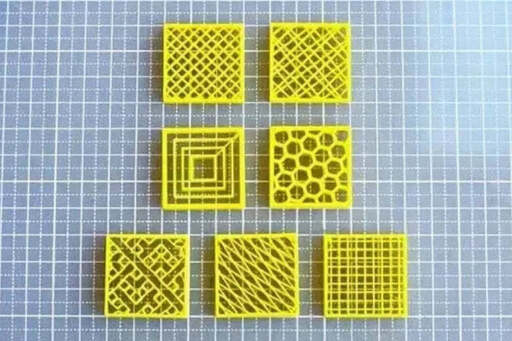
It would be cool to have a variable density infill that reduces with distance from the wall. Not sure how that would work in practice with most infill types.
OrcaSlicer has things like Adaptive Cubic or Lightning patterns that have more infill near the walls.
The other members of that slicer family (BambuStudio, PrusaSlicer, etc) likely have them too.
Lightning infill is absolutely bonkers WRT material efficiency and print speed for large parts. It doesn’t offer the same level of strength as something like adaptive cubic though, but it’s faster and uses less material.
Lightning is usually my go to for non functional parts.
Way lower print times and filament use.
For functional parts I usually use gyroid, adaptive cubic, 3D hexagon or one of the other I fills that puts filament in many directions in three axes. unless the stress points are very obvious, and then I sometimes eyeball basic bracing and add it with my (very) limited CAD skills.